How to Design Custom Cards That Tolerate Normal Trim Variation
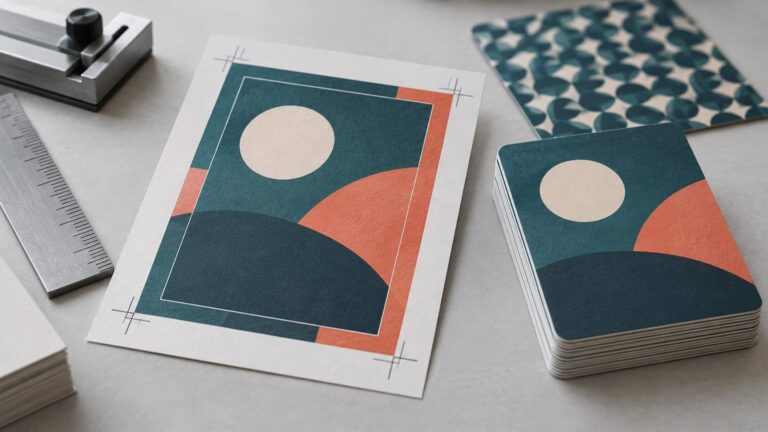
Build trim-tolerant custom cards by separating bleed, trim and safe-content zones, then choosing borders, backs and corner details that do not expose small cutting shifts.


Build trim-tolerant custom cards by separating bleed, trim and safe-content zones, then choosing borders, backs and corner details that do not expose small cutting shifts.
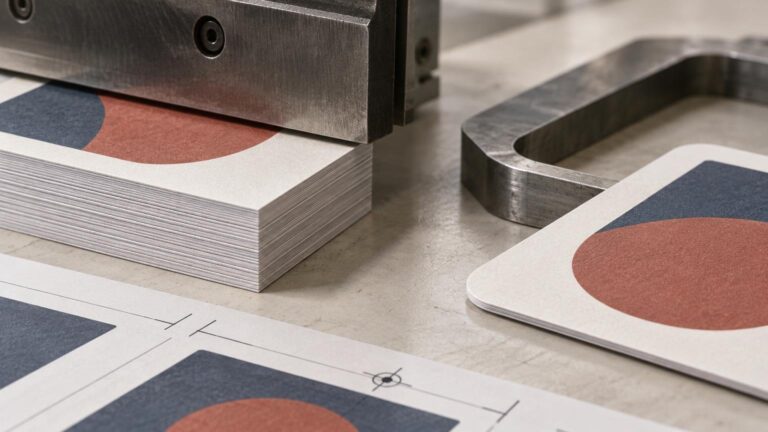
Guillotine cutting produces straight-sided card blanks, while a full-contour die or punch forms the finished perimeter and rounded corners. Learn how each method affects size, registration and deck consistency.
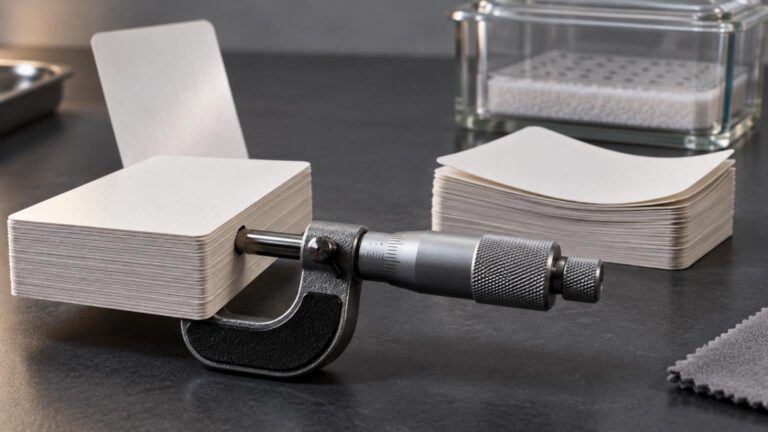
Humidity can change a paper card’s dimensions, stiffness, surface behavior and curl. Learn why perceived thickness is not the same as caliper and how to compare cards under controlled conditions.
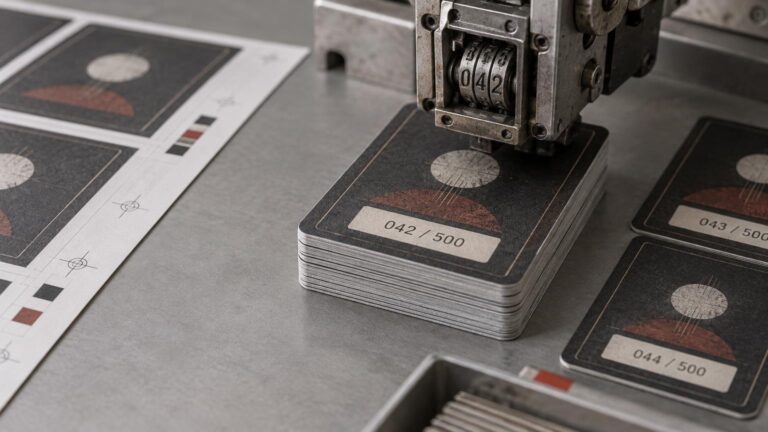
Serial numbering is a data, printing and finishing-order problem—not merely a line of artwork. Compare four production routes and learn what to specify before printing.
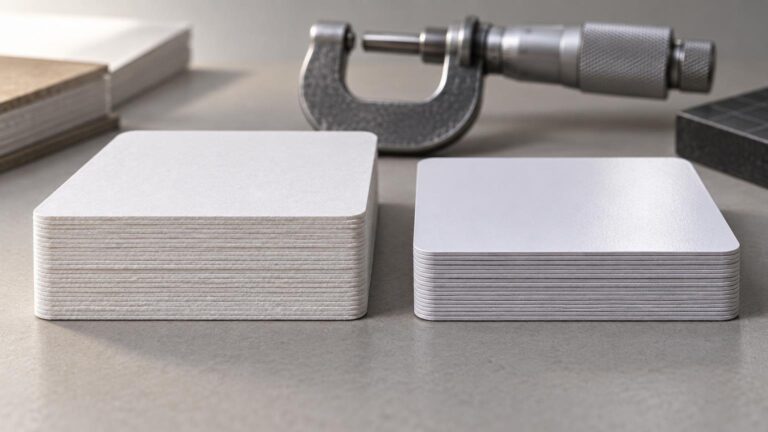
GSM measures a sheet’s mass per area, not its thickness, rigidity or surface character. Here is what actually makes equal-weight cardstocks feel different.
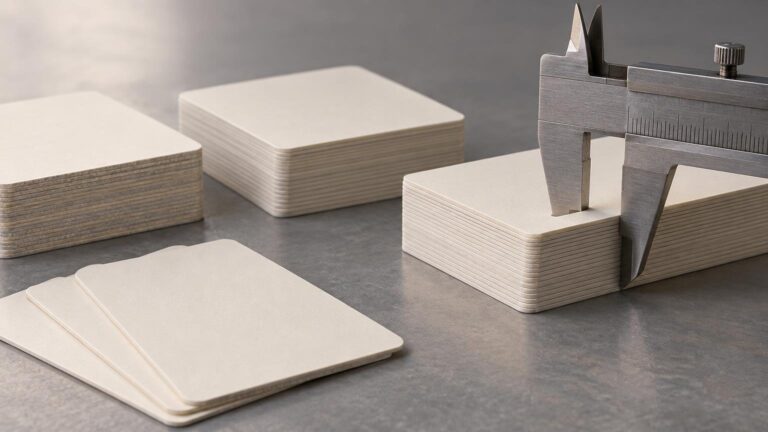
GSM measures mass per area, while caliper measures thickness. Paperboard bulk connects the two, but neither measurement alone predicts stiffness, feel or finished-card performance.
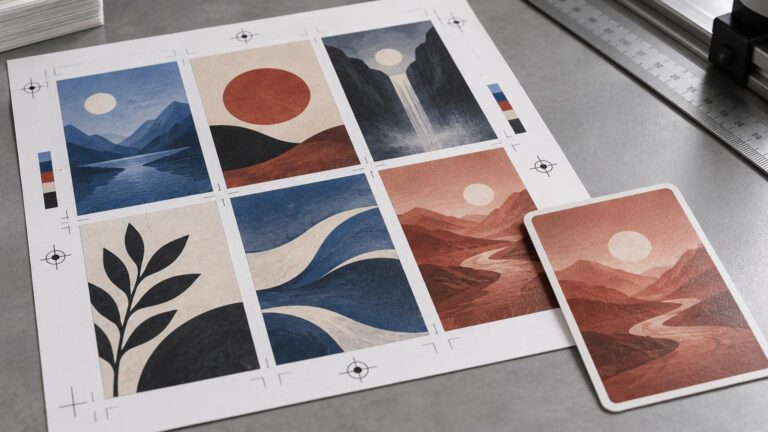
Crop marks identify the intended trim edge, while registration marks align color separations or help compatible cutting equipment locate a printed sheet. This guide explains how both relate to bleed, safe areas and card-cutting tolerances.
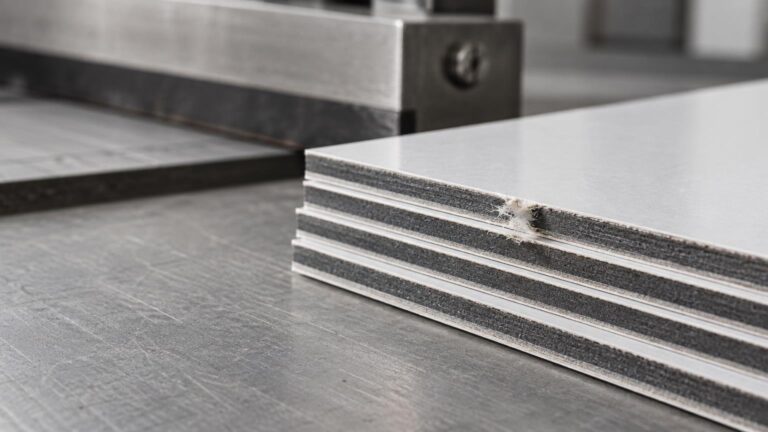
Rough or raised card edges usually indicate that the cutter compressed, displaced, or incompletely severed part of the card construction. Here is how to isolate the cause safely.